




What is brake dust, where does it come from, and how do I reduce it?
First, it’s important to understand that there is no such thing as a completely dust-free brake pad. By their very nature, braking systems rely on the combination between cast-iron brake discs and friction materials, which inevitably produces brake dust.
So, there are two things that drivers look for:
- Lower dust
- Dust that’s easy to remove/wash off
This is where EBC Brakes comes in with two great offerings.
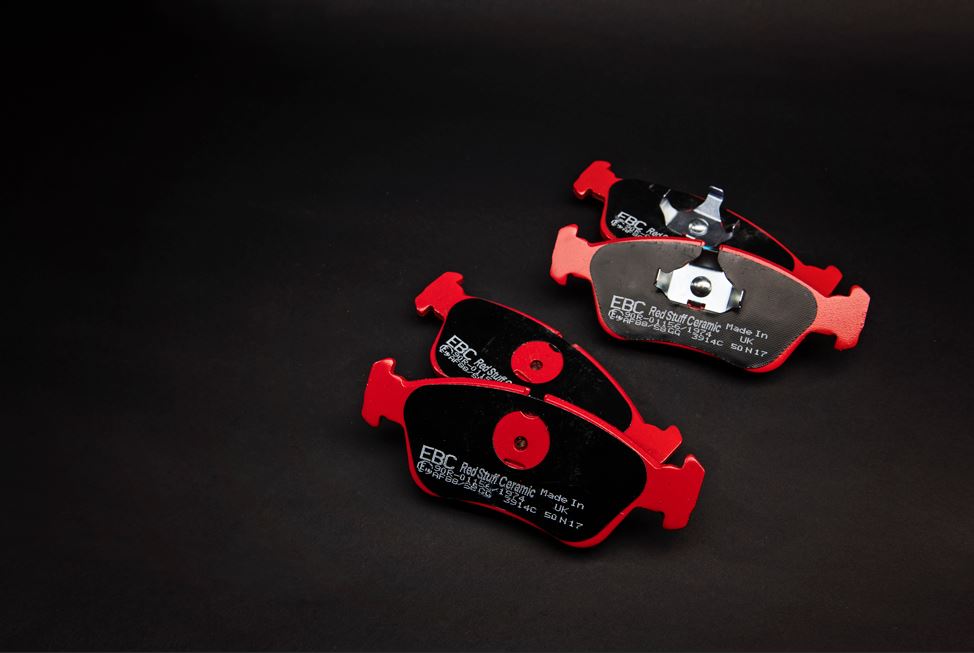
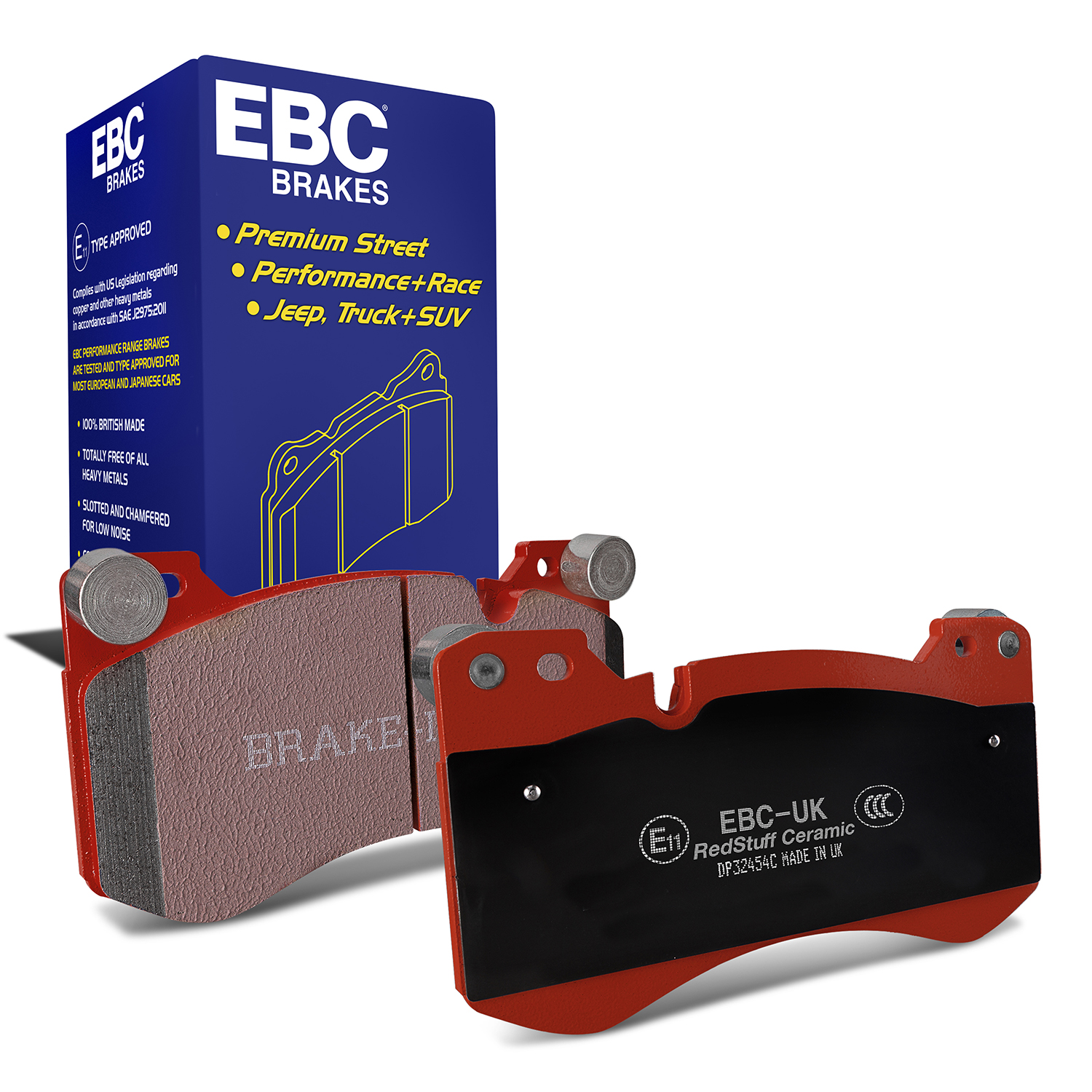
EBC Redstuff Copper Free Ceramic Granule Enhanced Brake Pads
A performance brake pad designed for premium and fast street driving, that reduces dust by 30-50%.
EBC Bluestuff Copper Free Non-Metallic Brake Pads
A super-street & trackday pad that also has similar low dust characteristics to our Redstuff range.
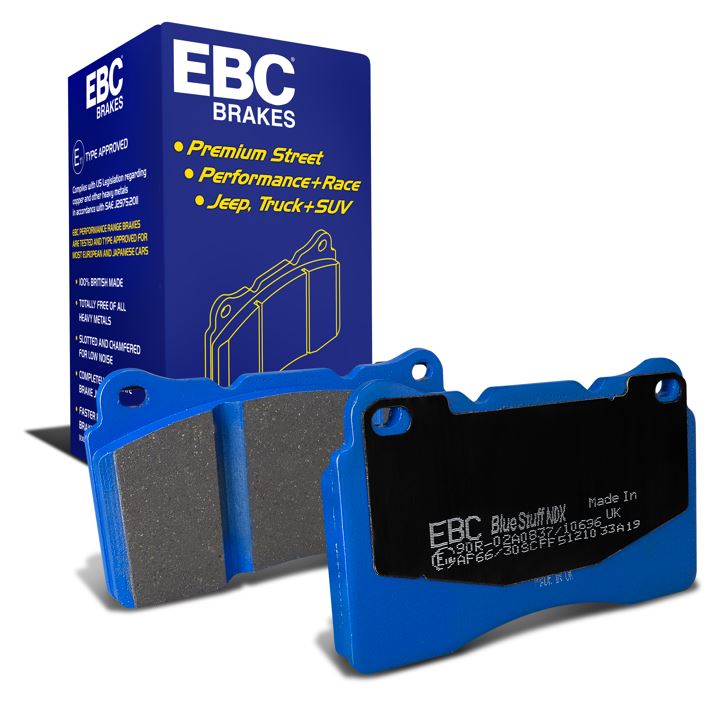
Redstuff is our global best-selling brake pad material, closely followed by EBC Yellowstuff. Its popularity is driven by the demand for reduced brake dust, with many drivers valuing cleaner wheels more than just performance. Bluestuff is also a low-dust brake pad compound but offers a significantly higher performance threshold. For drivers who regularly push the gas, Bluestuff is the best choice.
What Causes Brake Dust?
Brake dust is primarily caused by iron (Fe), which is present in high volumes within semi-metallic brake pads. These pads are made from steel fibres compressed together using binders such as resins, along with a few other ingredients. As a result, when you buy a semi-metallic brake pad (which 95% of OEM pads are), you are actually buying a steel scratch pad modified to make it workable as a friction material.
Why do OEM manufacturers use semi-metallic brake pads? Cost.
Testing carried out by EBC Brakes has shown that when brake dust is washed from wheels, dried, and analysed using spectro analysis, it contains a high percentage of Fe. This iron content comes from either the semi-metallic brake pad material or the brake disc itself.
On the contrary, EBC uses man-made fibres such as Kevlar or Twaron in their pad mixes which serve the purpose of binding the pad matrix together but with a softer, less abrasive feel. EBC automotive pads also contain NO harmful material such as copper, or antimony sulphide derivatives such as antimony tri-sulphide, lead, cadmium or mercury.
EBC Brakes achieves pad friction without scratching the iron rotor and instead using expensive ingredients, which we won’t list here to prevent giving the competition a heads up. However, it’s sufficient to say that EBC, in its UK pad facility, has some of the best chemists in the industry who are constantly working on how to make brake pads work better with less dust and low noise while maintaining high performance.
Why Are My Wheels Dusty?
The iron dust from a semi-metallic pad is also, to a degree, magnetic which means it is naturally attracted to your alloy wheels. AI gives us this explanation:
“Iron dust attaches to aluminium primarily due to chemical reactivity (specifically the thermite reaction), magnetic attraction, and electrostatic forces (such as oil/static).
Chemical/Thermite Reaction: Iron oxide (rust) is highly attracted to aluminium.”
So, less Iron (Fe) in the pad means less attraction, which means any dust is easier to wash off your wheels.
What is the Ceramic in a Ceramic Brake Pad?
Ceramic materials are generally used as granules in small percentages, where they serve to enhance material life and help reduce noise. EBC wish to state that their automotive brake products NEVER have contained Ceramic FIBRES and are all ZERO COPPER materials.
Does a Lighter-Coloured Brake Pad Reduce Black Brake Dust?
Well, it might, but as we have explained above most of the dust is Iron (Fe).
Will Brake Performance Be Better With Ceramics?
Maybe, and here’s why. It’s also not just about the buzz word “ceramic”.
Ceramic pads fall into a family of pads called Organics. EBC Redstuff, Yellowstuff and Bluestuff compounds are organics, all using the fibres as described above, enhanced with ceramic materials and some very important other additives.
In a nutshell, it’s important not to choose brake pads based on buzz words alone. It’s best to look at the performance, lifetime, brake effect and the noise dampening, which EBC go the extra mile with by incorporating dampers/counterweights, which can be seen in the image below.
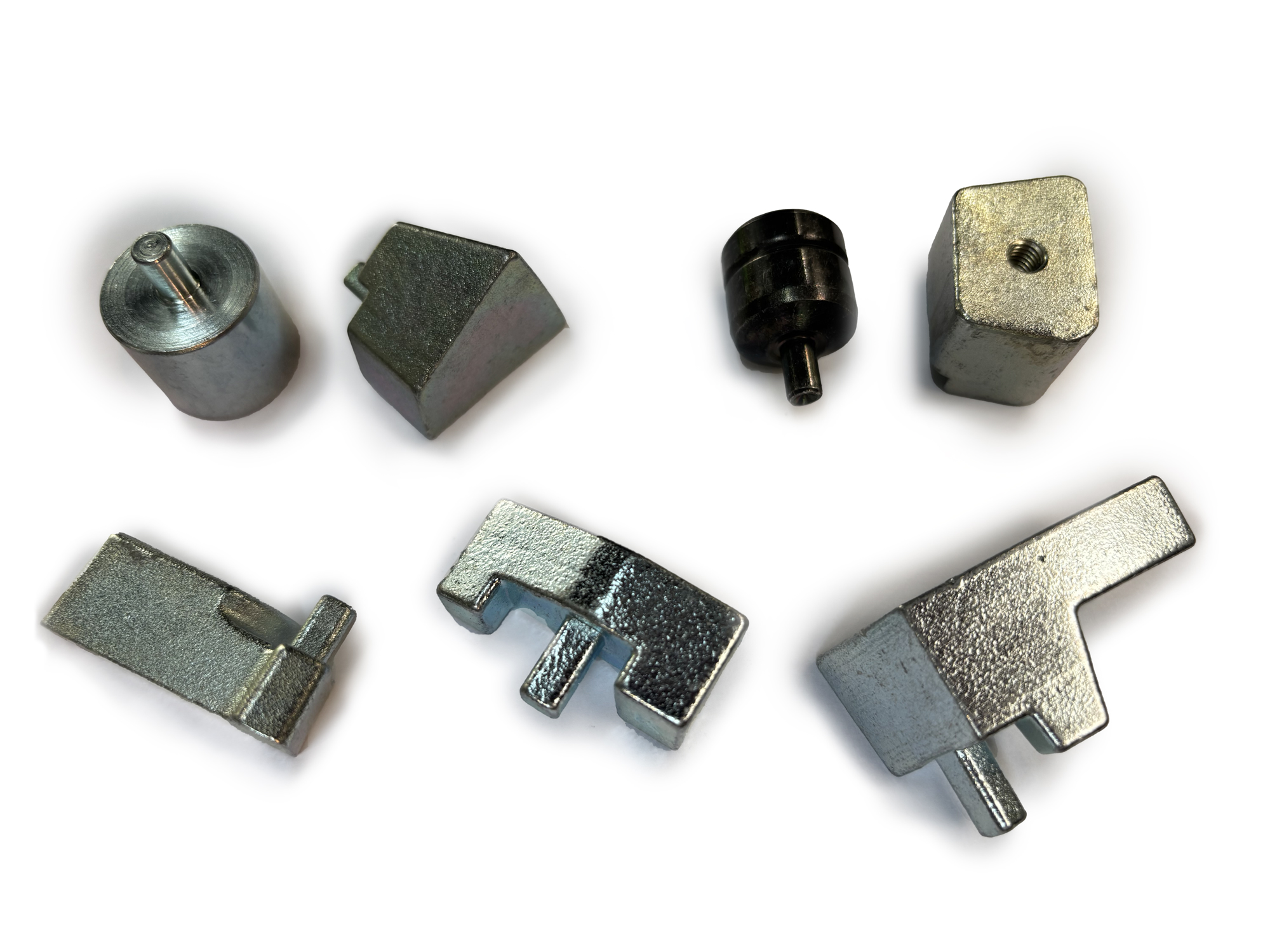
Some pads have dampers ( counterweights ) of different shapes and sizes attached to the top of the backplate .Pads with no damper weights are priced 20-30% less than pads that do include them so check before you buy.
Dampers or counterweights can reduce vibration and brake noise significantly
Finally shims, edge chamfers and centre line slots play a major part in reducing brake noise and are a reason why the EBC pads which do feature those, rank amongst the quietest pads out there.